
Artificial intelligence at school: our policy for using it with awareness
Artificial intelligence is already in homes, classrooms and our students' backpacks. That is why, with the new school year, we chose not to ban it but to regulate it and support how it is used: an internal policy approved by the school's governing body and the teachers' board, covering both Vittoria Junior and Vittoria Licei.
The document has a twofold purpose. On one hand, it protects the whole school community from a fast-moving technology by building knowledge of the tool. On the other, and above all, it keeps the person at the centre, above the machine.
What the policy says
The regulation distinguishes between permitted, improper and prohibited uses, and rests on a few key principles:
- People first. AI supports studying and teaching but does not replace them. Teachers remain responsible for lesson planning, assessment and feedback; students for what they submit.
- Transparency. When AI-generated content ends up in submitted work, it must be declared, stating the tool, the prompt and the date. Personal study does not require a declaration.
- Study and assignments. For studying, AI can be a valuable ally: explanations, examples, quizzes, foreign-language conversation practice. In language subjects, where linguistic skill is itself being assessed, it cannot be used to correct or improve one's own written work unless the teacher says otherwise.
- Understanding comes first. Every student must be able to explain what they hand in. For this reason, teachers may ask for an oral explanation at any time: it is an ordinary form of assessment, not a sanction.
- Data protection. Names, grades, images, personalised learning plans and any other information relating to students, families and staff may not be entered into unauthorised AI tools.
- Human assessment. Grades, promotions and evaluations can never be delegated to an artificial intelligence system. Facial recognition, profiling and invasive surveillance of students are also prohibited.
The policy draws on the European Artificial Intelligence Act (AI Act), the GDPR and the guidelines of the Italian Ministry of Education and Merit. Families are invited to read it and to support responsible AI use at home. For independent use of tools that require an account, the age limits set by each platform's terms of service apply (normally 14 in Italy); below that age, parental authorisation is required.
Training, not just rules
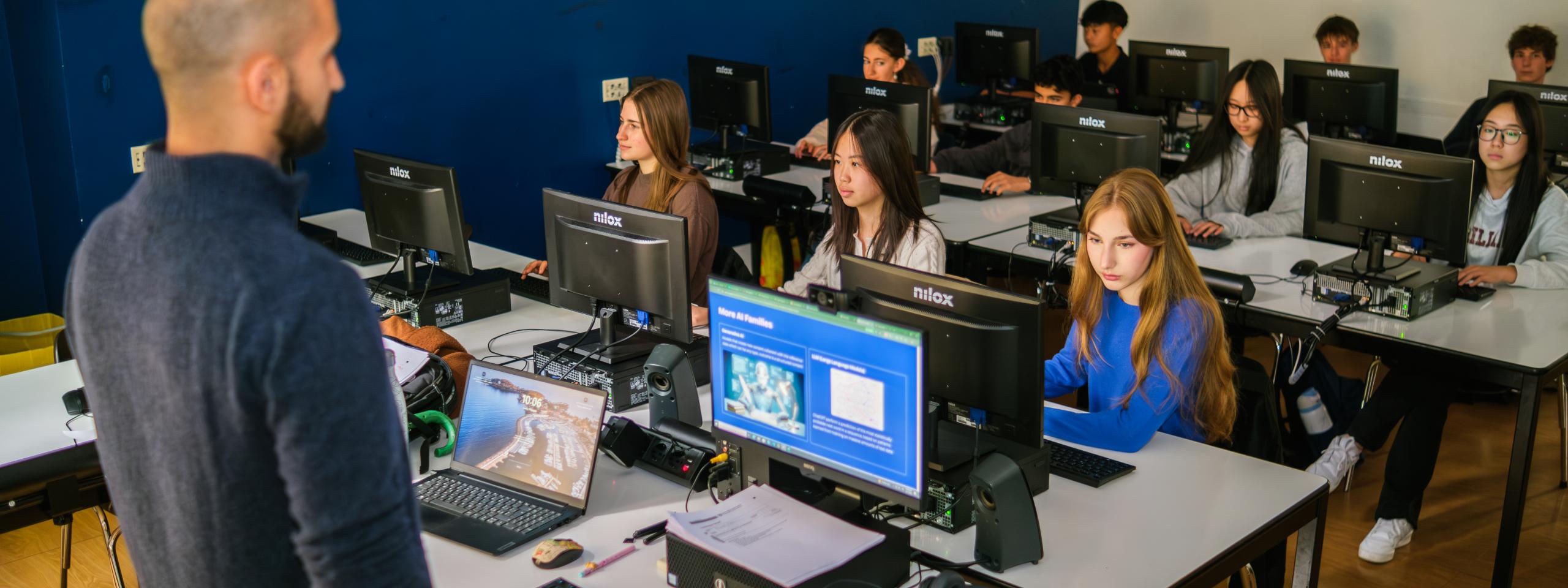
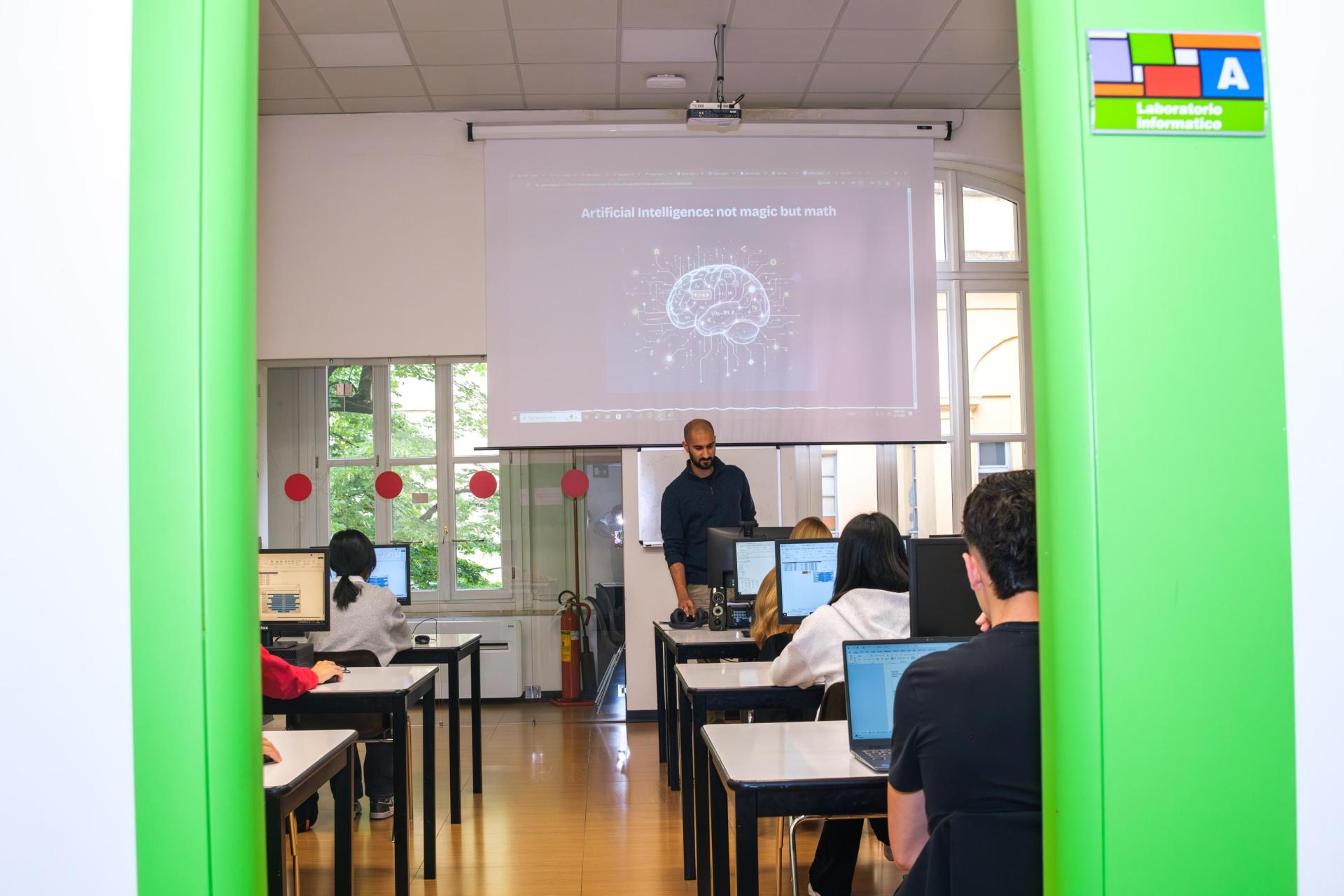
We are pairing the rules with training. For teachers, we have set up dedicated profiles and a professional development programme; for students, support is daily, for example when writing the papers required for their diploma, where we help them interpret and work with the answers the machine provides.
The policy is a living document: it will be reviewed at the end of each school year and whenever regulatory changes or new tools make it necessary.
We want our students to keep nurturing creativity, empathy and the ability to build relationships, skills we will need more and more. For us, educating about artificial intelligence means, first of all, educating students not to delegate their own thinking.