News
JUNIOR

☀️ STEM June: creative ice creams and magic bubbles

June brings with it the heat and a desire to play with air and colours. At the nursery, we have devised four activities that stimulate hand-eye coordination, introduce basic concepts of chemistry and physics (reactions, density, surface tension) and encourage fine motor skills through hands-on activities and sensory exploration.

🍦 Ice cream workshop


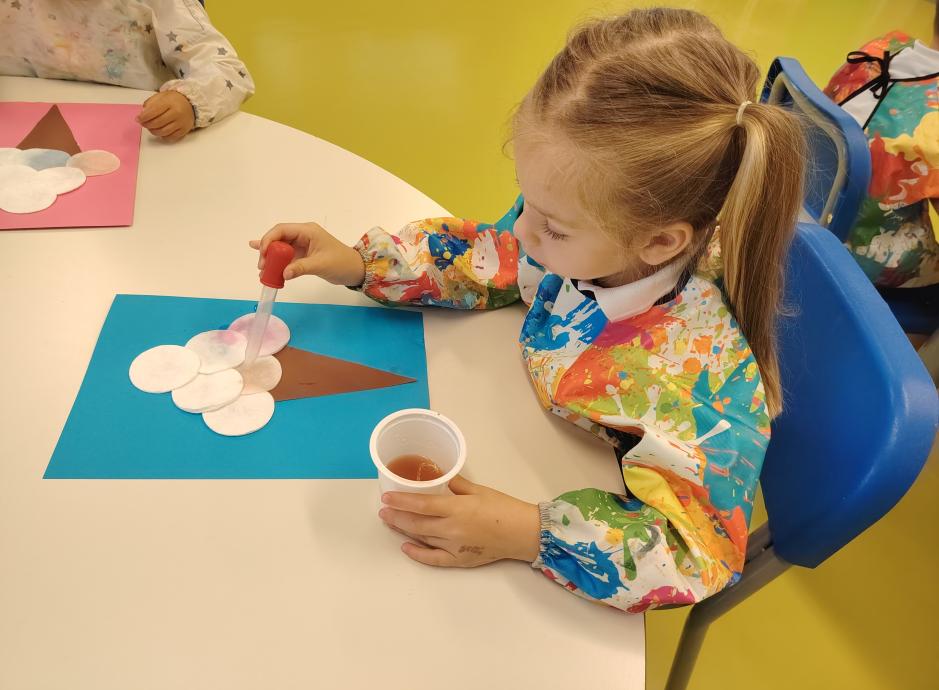
  • What they do: the children make ‘ice-cream cones’ by filling holders (real cones or cardboard templates) with white cotton wool. Using pipettes, they draw up water coloured with food colouring and drip it onto the cotton wool.
  • STEM learning: this is a fantastic exercise in fine motor skills and coordination (using the pipette). The children observe the principles of absorption and capillarity: the cotton ‘drinks’ the liquid and the colours blend together, creating gradients and new shades (basic concepts of optics and colour mixing).
     

Foamy ice creams (shaving foam and food colouring)


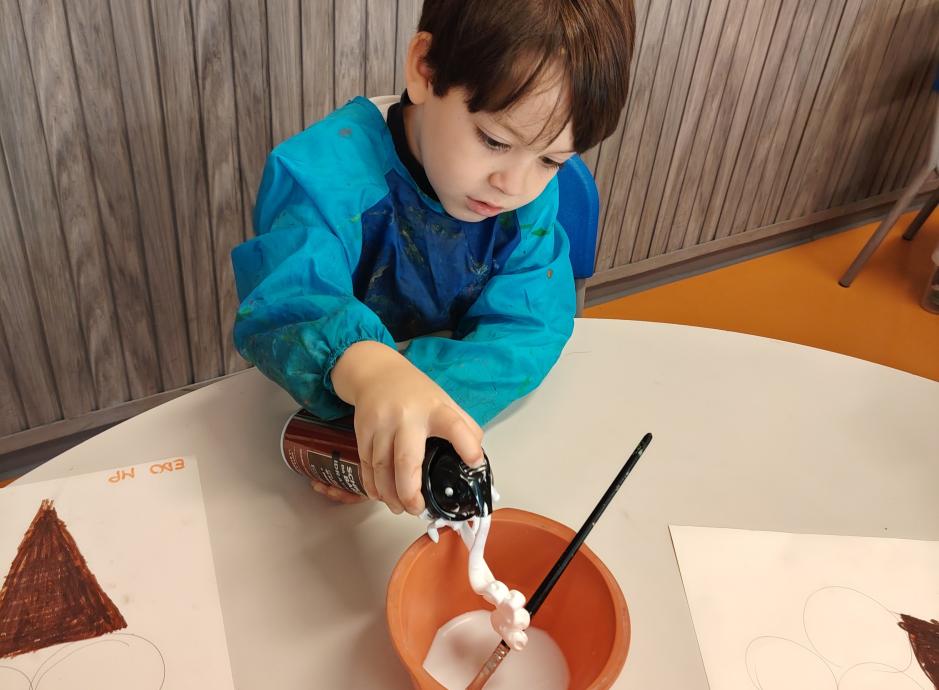
  • What to do: mix the shaving foam with a few drops of food colouring (and a pinch of white glue if you want the ‘ice cream’ to dry in a raised texture). The children use spoons or piping bags to create super-fluffy scoops of ice cream on coloured card.
  • STEM learning: tactile and sensory exploration. Shaving foam is a fun example of a state of matter (a colloid: gas trapped in a liquid). Children explore density and the ‘fluffy’ texture, and observe how the food colouring spreads through a base that is denser than water.
     

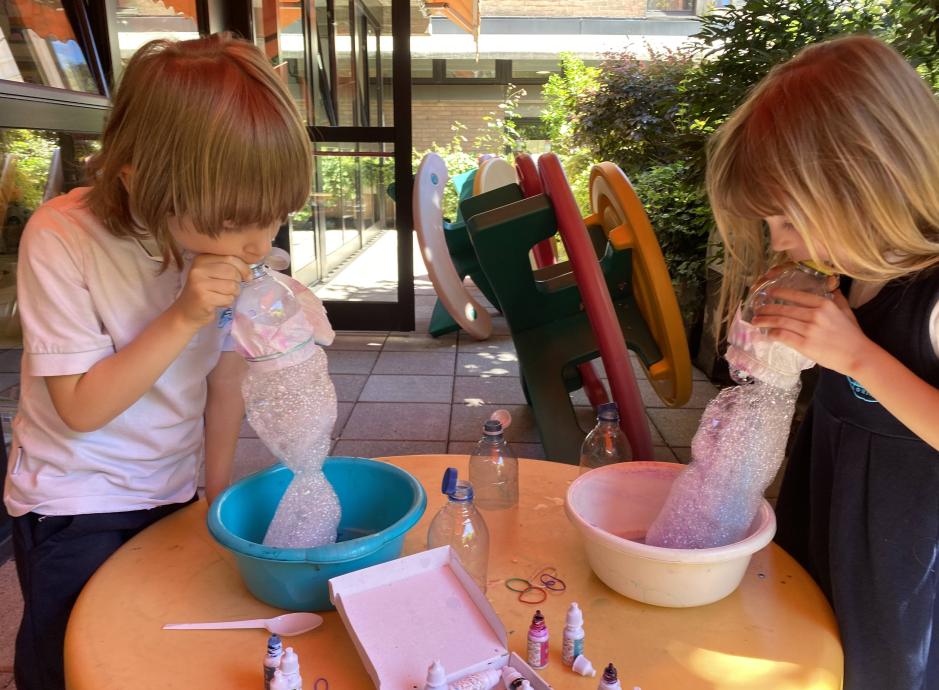
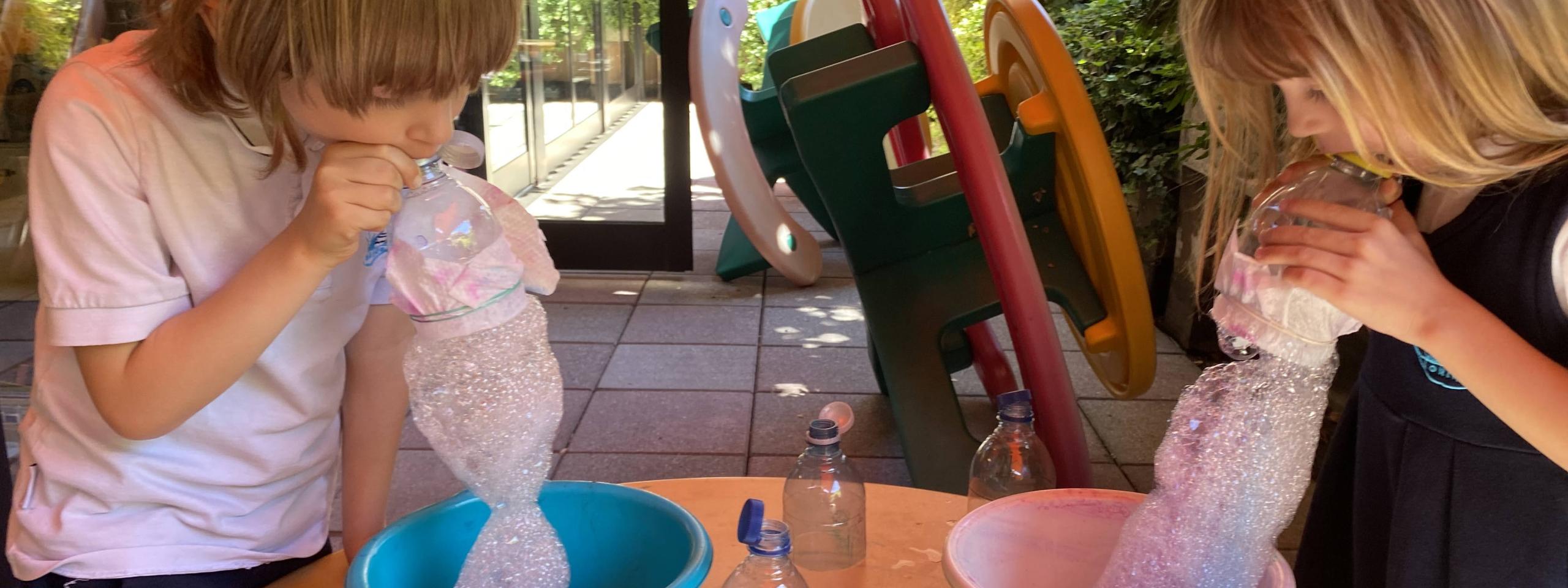
🧼 Spectacular Bubble Workshop – The Pop-Bubble Elephant (plastic bottles and washing-up liquid)


  • Here’s what you do: cut off the bottom of a plastic bottle and secure an old terry-cloth sock to the cut end with an elastic band. Dip the part with the sock into a mixture of water and washing-up liquid. By blowing into the neck of the bottle, you create a very long, thick ‘snake’ of foam that resembles an elephant’s trunk.
     
  • STEM learning: an introduction to fluid dynamics and air pressure. The sock acts as a tiny sieve: the air blown by the child passes through hundreds of tiny holes in the soap-soaked fabric, trapping the air in thousands of interconnected microbubbles.
     

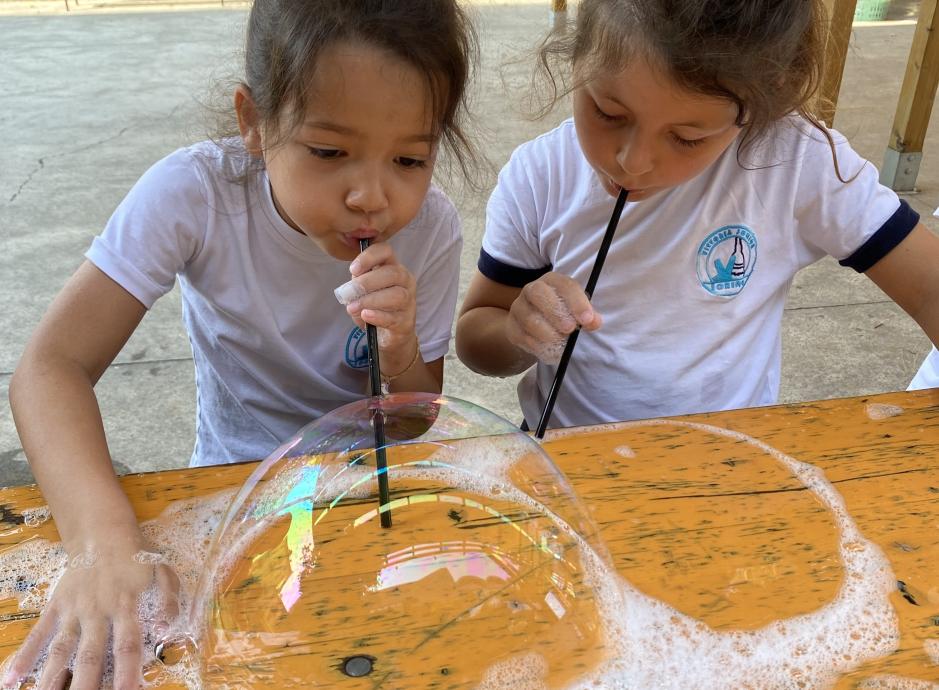
Long-lasting soap bubbles (sugar, washing-up liquid, water and straws)


  • What to do: prepare a special potion by mixing water, washing-up liquid and a tablespoon of sugar. After wetting the surface of the table, the children use straws to blow directly onto the surface, creating giant half-spheres of bubbles or bubbles within bubbles.
     
  • STEM learning: an experiment in materials chemistry and surface tension. The sugar acts as a ‘binder’ that slows down the evaporation of the water, making the bubble walls more elastic and resilient. The children explore the geometry of shapes (the bubbles on the table merge to form flat walls) and learn to control their breathing.
     

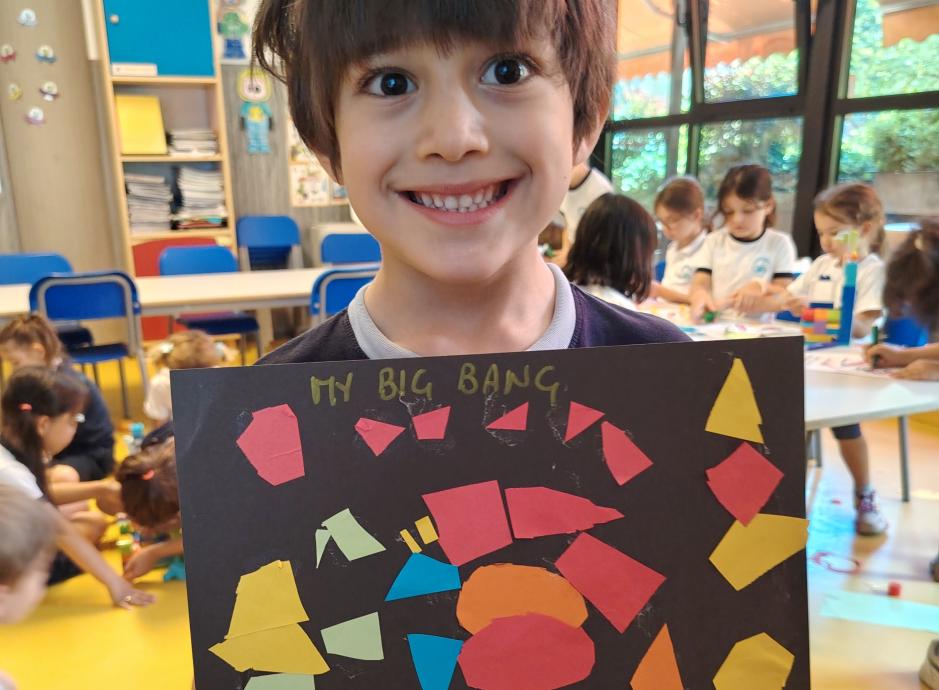
The Cardboard Big Bang

After learning about the Big Bang, the pre-school children recreated it by cutting out and sticking shapes made from coloured cards.